Chrome Hill and Parkhouse Hill Walk: Dragon’s Back Peak District
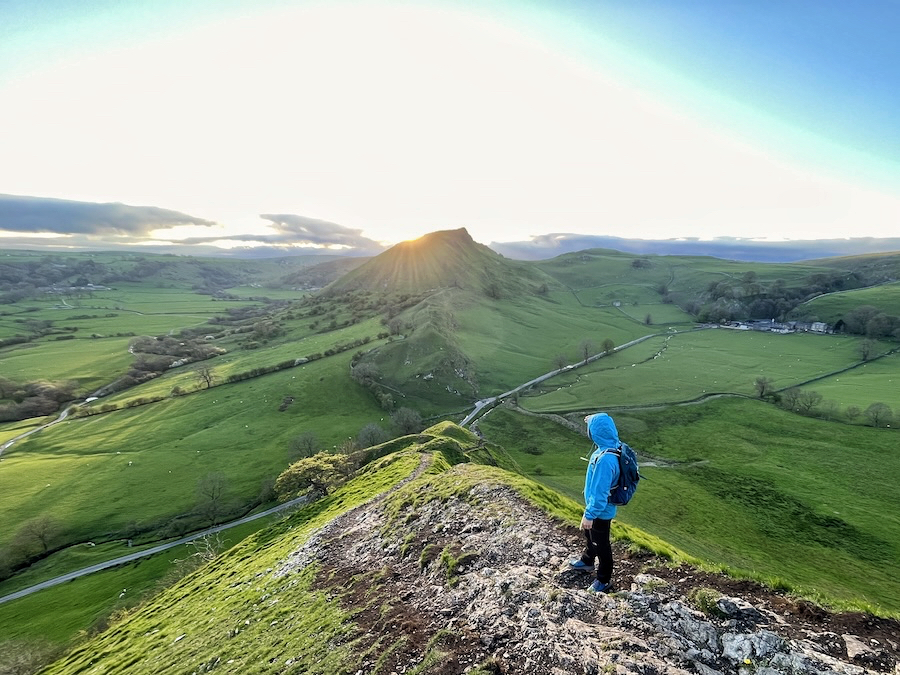
If you’ve come across the Dragon’s Back in the Peak District, the Chrome Hill and Parkhouse Hill walk is the route people are talking about. It’s the narrow ridge between the two that gives it that shape, and it stands out immediately once you see it in person.
Most people walk it as a circular route, with short, steep climbs onto both hills and a mix of paths between them. We did the full loop, including a few brief scrambly sections along the ridge and wide views across the surrounding fields, enough to make it feel a bit different from the usual Peak District walks without turning it into anything overly technical.
This post breaks down whether it’s worth it, how exposed it actually feels, and what the route is like in practice.
Is the Chrome Hill and Parkhouse Hill walk worth it?
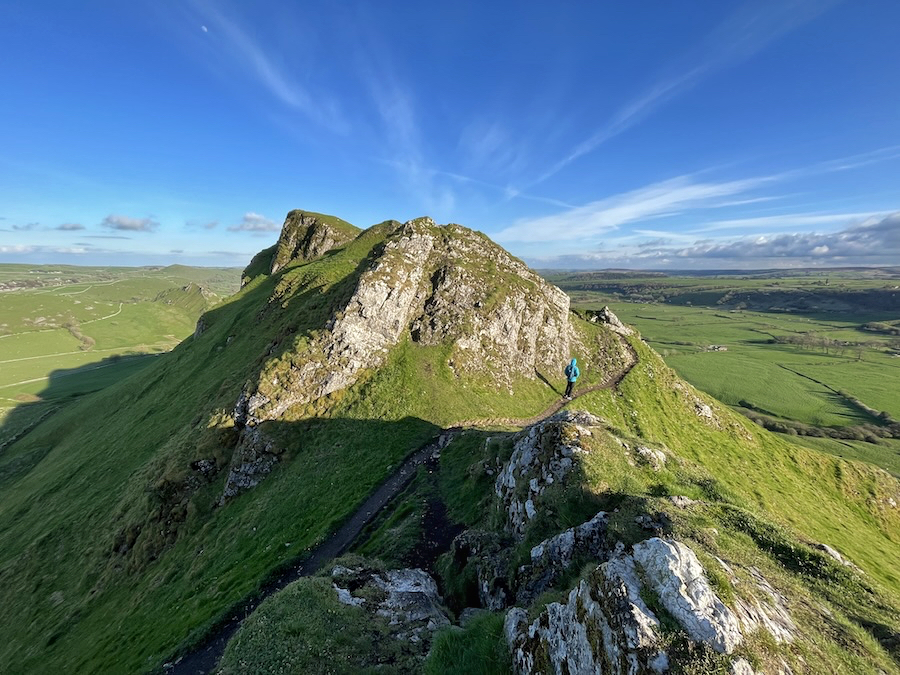
Yes, if you want something a bit different from the usual Peak District walks. The ridge between Chrome Hill and Parkhouse Hill gives it a shape you don’t really get elsewhere.
It’s not a long walk, but it’s not an easy one either. The climbs are short and steep, the ground is uneven in places, and the ridge adds a few brief scrambly sections that make it feel more involved than the distance suggests.
It’s less suited to anyone looking for something flat or easy to switch off on. You need to pay more attention here than on the typical valley paths nearby.
If you’re comfortable with that, it’s an easy half-day walk that feels more interesting than most routes of a similar length.
What the Dragon’s Back walk is actually like?
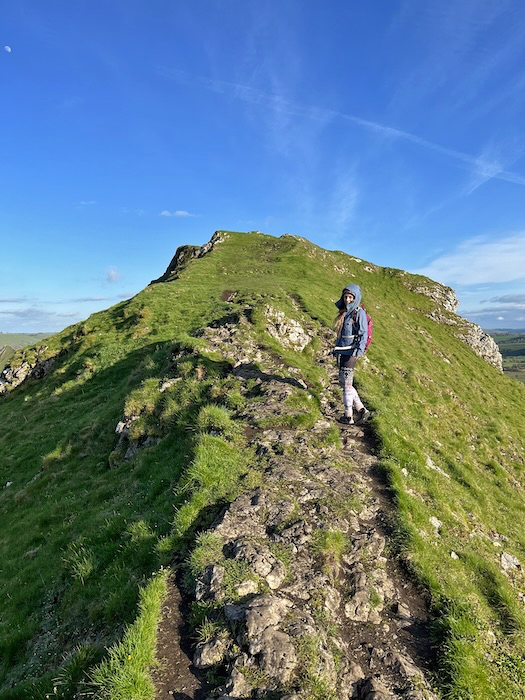
The direction you walk the circuit makes a noticeable difference. Going up Parkhouse Hill first means tackling the steeper, more awkward sections on the way up, which is generally easier than coming down them.
Parkhouse Hill is the more demanding of the two. The climb is short but direct, and once you’re on the ridge, the path narrows with a few uneven, rocky sections where you’ll naturally use your hands for balance. It never turns into proper scrambling, but it’s enough to slow you down and make you pay attention.
From the top, Chrome Hill sits directly opposite, and this is where the “Dragon’s Back” shape is most obvious. You don’t really see that shape when you’re on the ridge itself; it’s more noticeable looking across at it or approaching from a distance.
The descent off Parkhouse Hill is the part that tends to catch people out. It’s steeper going down than up, with loose ground in places, so you end up picking your way down rather than walking normally.
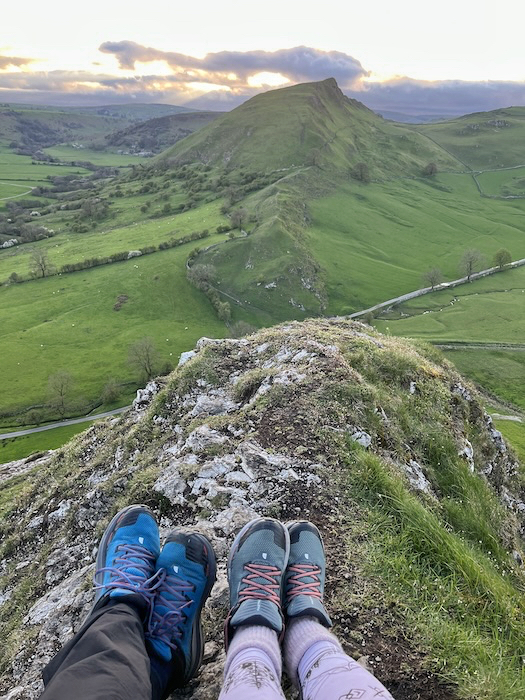
Chrome Hill feels more straightforward by comparison. The climb is still steep, but the path is clearer and less broken up. Once you’re on top, it opens out slightly and feels less confined than the narrower sections on Parkhouse.
Away from the ridge, the route changes completely. You’re back on wider paths, crossing fields and quieter valley sections, with the hills behind you rather than all around you. It’s easier walking, but also less memorable than the ridge itself.
The Chrome Hill and Parkhouse Hill walk route
There are a few ways to do the Chrome Hill and Parkhouse Hill walk, from a quick up-and-down to longer loops that take in both hills. You could park nearby and just climb one of them, but that misses most of what makes this route interesting.
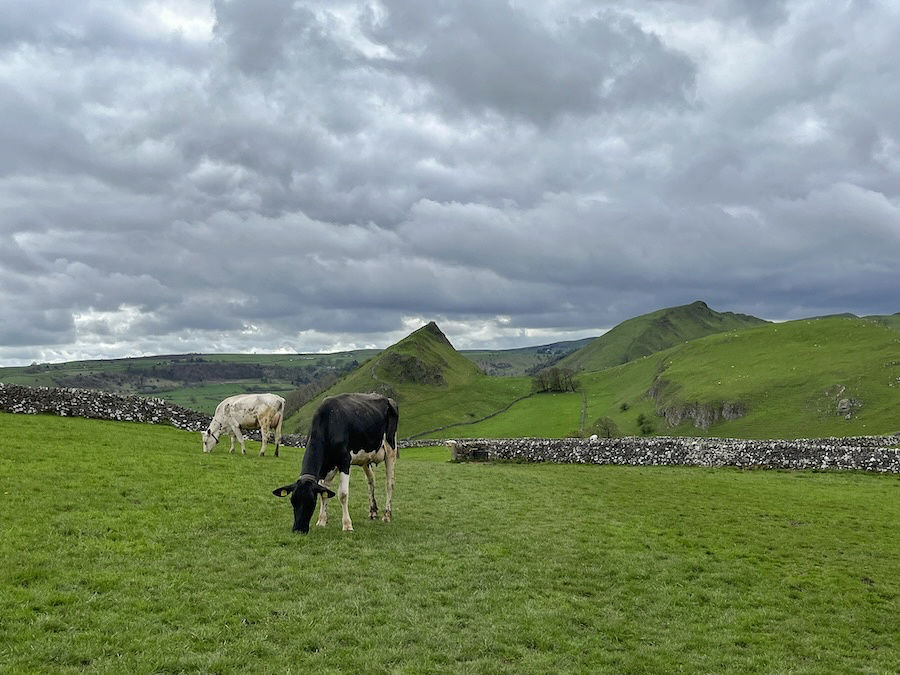
We followed a circular route of around 7 to 8 kilometres starting from Earl Sterndale, covering both hills along with the valley sections and surrounding fields.
From Earl Sterndale, the route heads out across fields before the hills come into view. At that point, you can either go straight up Parkhouse Hill or continue around and approach Chrome Hill first. Going up Parkhouse Hill first is the more common option, as it means tackling the steeper, more awkward sections on the way up rather than on the descent.
The climb onto Parkhouse Hill is short but direct, and you’re onto the ridge quickly. From there, the path runs along the top before dropping down to the road between the two hills.
Chrome Hill comes next, with another steep but more straightforward climb. The path is clearer here, and once you’re on top, it feels more open compared to the narrower sections on Parkhouse.
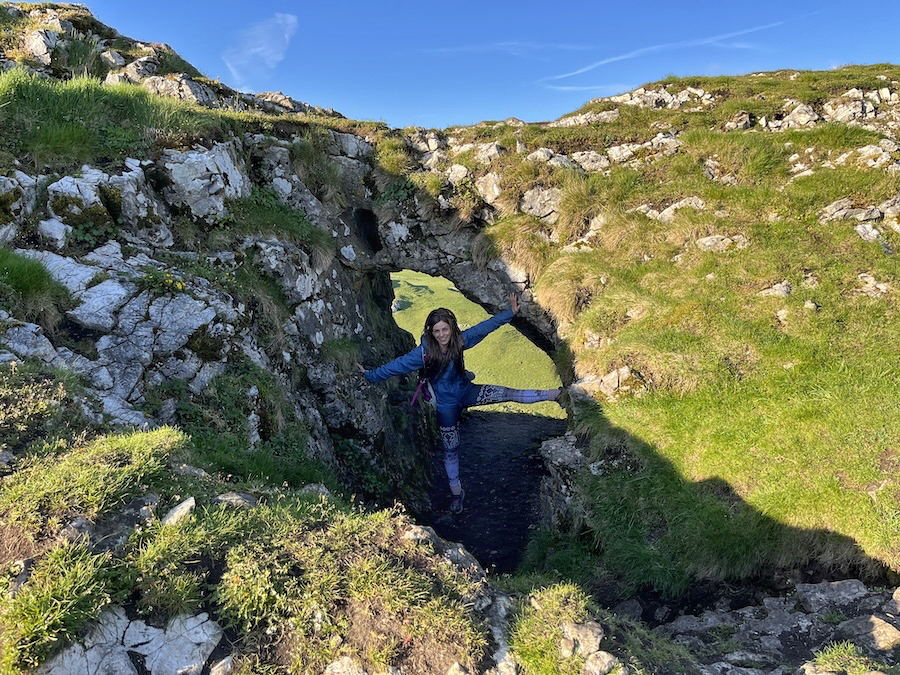
After descending Chrome Hill, the route opens out into fields and quieter valley paths, looping back towards your starting point. This section is easier underfoot and a bit less memorable, but it rounds off the walk without needing to follow anything complicated.
If you want to follow a live map on your phone, you can view the route on AllTrails. It’s the same route we took, and there is also a longer walk if you’re up for the challenge.
Where to park and start the walk
Most people start from Earl Sterndale, where there’s limited roadside parking rather than a formal car park. It’s a small village, so spaces fill up quickly, especially on weekends.
We parked just outside the cemetery on the edge of the village, which worked well and puts you straight onto the route without needing to double back.
From here, you’re heading out across fields towards the base of the hills. The paths are easy enough to follow, and Chrome Hill and Parkhouse Hill come into view fairly quickly once you’re out of the village.
There aren’t really any facilities here, so it’s worth arriving prepared. Once you’re on the walk, you won’t pass anywhere to stop.
When to go and what to expect
Dry conditions make a noticeable difference here. The climbs onto both Chrome Hill and Parkhouse Hill are on limestone, which gets slippery quickly after rain. Even when it’s dry, some sections feel polished underfoot, so you’re watching where you step more than on most Peak District walks.
Wind is another thing to factor in. There’s very little shelter along the ridge, so it can feel more exposed than it looks on a calm day. On a clear day, it’s straightforward, but in low cloud or fog, you lose a lot of the visibility that makes the walk what it is.
We had good weather when we did it, which made the ridge sections feel straightforward and worth taking your time over. In poorer conditions, especially after rain, it would feel like a different walk entirely.
You’ll also pass through a few fields along the route. When we did it, there were cows in some of them, so it’s something to be aware of, particularly if you’re walking with a dog.
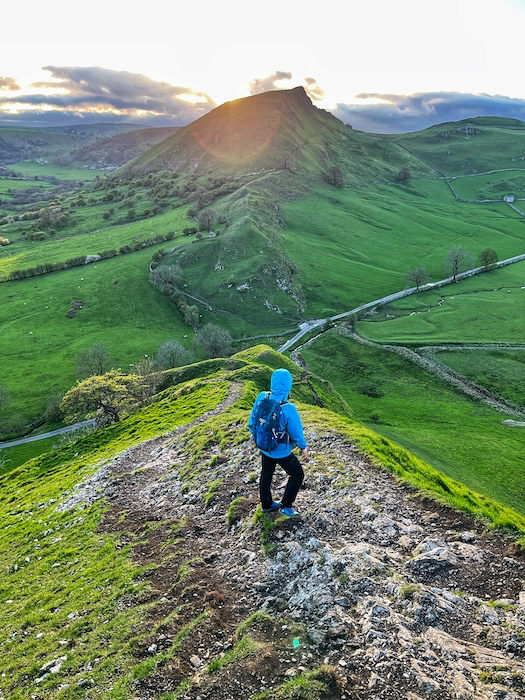
It’s not the longest walk, but it’s one of the more interesting shorter ones in the Peak District.