Donna Nook Seals: Best Time To Visit, What To Expect & Parking
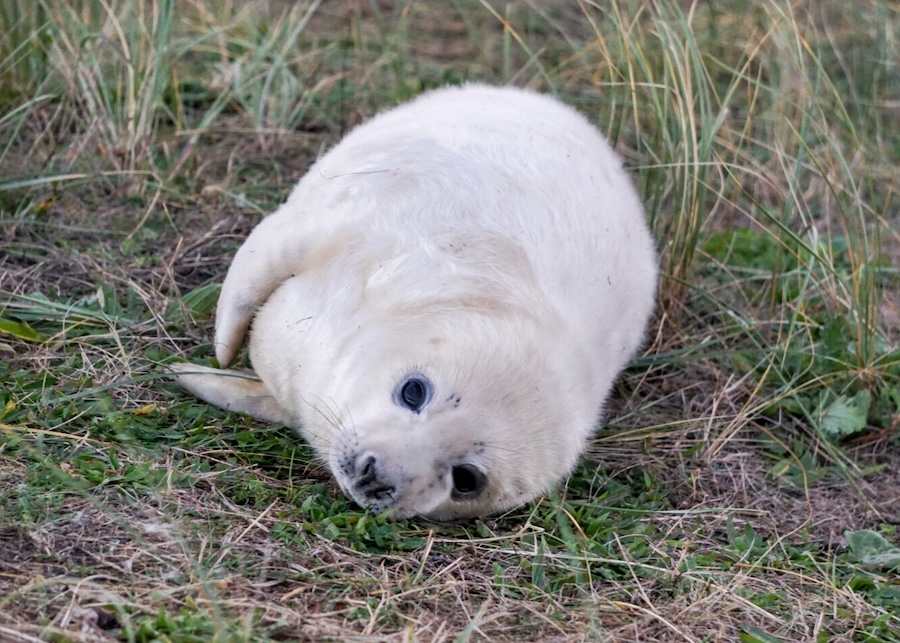
Every autumn, grey seals return to Donna Nook on the Lincolnshire coast in huge numbers to give birth, turning this quiet stretch of coastline into one of the best places in Britain to see seal pups.
The Donna Nook seals usually begin arriving in late October, with numbers building through November before falling again in December. If you’re hoping to see plenty of fluffy white pups, November is generally the month to aim for.
We’ve visited Donna Nook more than once during the breeding season, including busy weekends when pups were lying surprisingly close to the viewing fence.
In this guide, I’ll cover when to visit, how to check the latest seal count, parking, costs and what it’s actually like to see the seals at Donna Nook.
Best Time To See Seals At Donna Nook
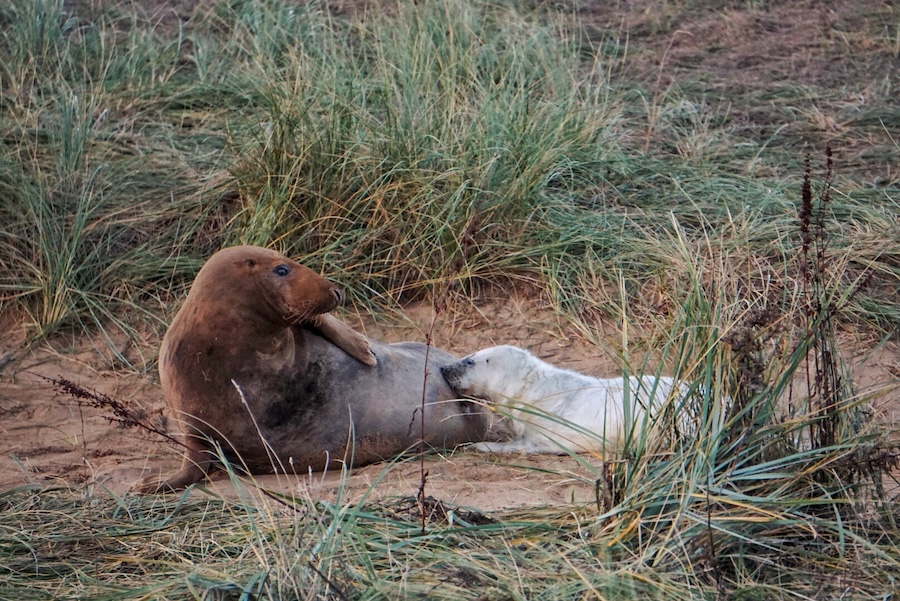
The best time to see the seals at Donna Nook is usually November, particularly if you want to see plenty of newborn pups. The first seals begin arriving in late October, numbers build throughout November, then start to fall during December as adults and weaned pups return to sea.
We have always tried to time our visits for when there are lots of pups, especially while many still have their fluffy white coats. You cannot predict exactly what you will see, but during the main breeding season there can be seals and pups all along the viewing area.
If you have the choice, I would visit on a weekday. We have only been at weekends because of work, and although the site was well managed, weekends during the main seal season can get busy. Earlier in the day is also worth considering. Donna Nook is exposed on the Lincolnshire coast, and after a few hours standing and watching the seals, you really start to notice the cold as the afternoon wears on.
When Can You See Baby Seals At Donna Nook?
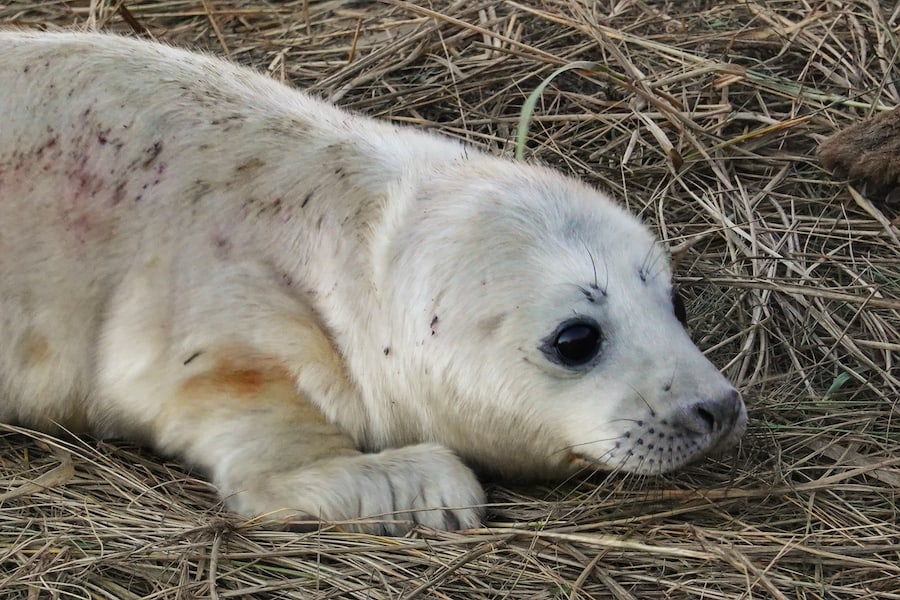
The first baby seals are usually born at Donna Nook from late October, with more pups becoming visible as the season moves into November. More are born throughout the month, making November the best time to visit if seeing plenty of pups is your priority.
Newborn grey seal pups have the fluffy white coats that Donna Nook is famous for, but they do not stay that way for long. They are weaned after only a few weeks and begin losing their white fur, so visiting during November gives you a better chance of seeing pups at different stages.
This was what we hoped to see on our visits, and there were pups all along the viewing area. Some were further out on the saltmarsh, while others were lying surprisingly close to the fence. You cannot touch them or cross the barrier, of course, but you can still get remarkably good views.
Donna Nook Seal Count
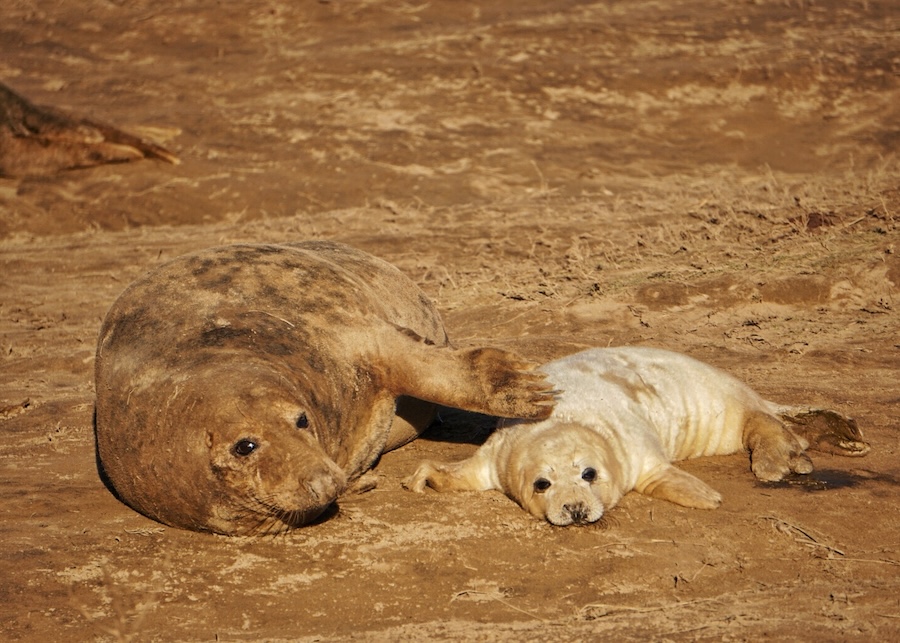
Seal numbers at Donna Nook change considerably throughout the breeding season, with new pups arriving as others are weaned and adults begin returning to sea. Lincolnshire Wildlife Trust publishes regular seal counts during the season, so it is worth checking the latest update before you visit.
During the 2025 season, the first pup was born on 22 October, although the first pups were not visible from the viewing area until early November. By 30 December, all the adult seals had left, and just 12 pups remained visible.
A total of 1,924 pups were recorded during the 2025 season, an increase of 275 compared with 2024. This followed an unexplained drop in pup numbers the previous year.
Before setting off, check the latest Donna Nook seal count from Lincolnshire Wildlife Trust. During the breeding season, this is the best way to see how many adults and pups are currently at the reserve.
How Busy Does Donna Nook Get?
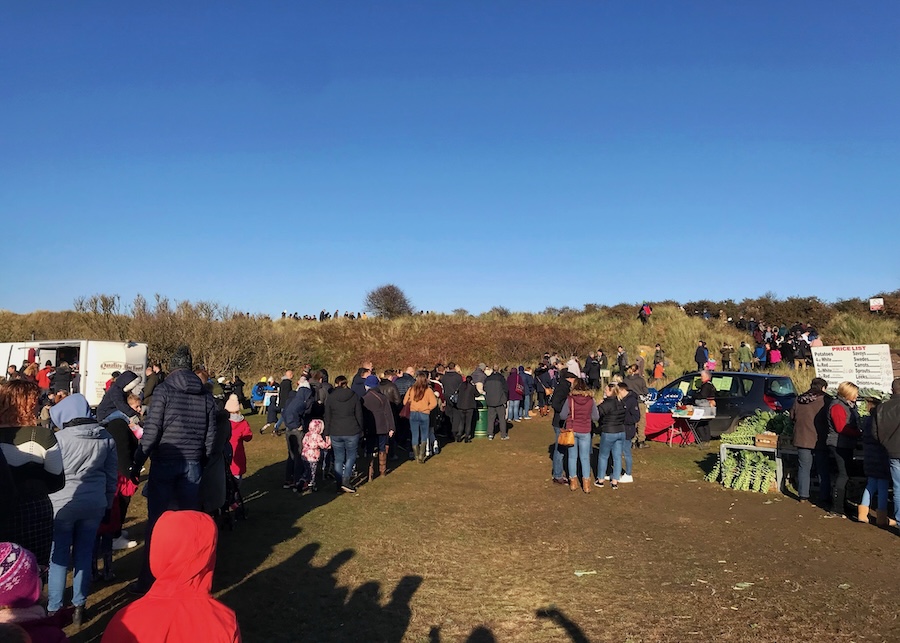
Donna Nook can get very busy during the peak seal season, particularly at weekends in November. If you have the choice, visiting on a weekday is likely to be quieter.
We visited at weekends and, despite the number of people, found the whole area surprisingly well managed. Traffic and parking were organised, so once we arrived, everything ran fairly smoothly.
The viewing area itself is long, which helps spread people out. We walked from one end to the other and never felt that the crowds stopped us from getting good views of the seals.
If you are visiting at a weekend during peak season, allow a little extra time for getting in and out. I would choose a weekday if I could, but I certainly would not avoid Donna Nook just because you can only visit at the weekend.
How Much Does It Cost To Visit Donna Nook?
It is free to visit Donna Nook and see the seals. There is no entrance fee or ticket to buy, so the main cost for most visitors is parking.
The main seasonal car park costs £5 per car for all-day parking. Limited free parking is also available at Stonebridge, although restrictions apply during busy weekends, as explained below. You do not need to book in advance to see the seals.
Donna Nook Parking
During seal season, the main Donna Nook car park is in a large field close to the viewing area. On both of our visits, we found it well organised, with people directing cars as they arrived. The car park is seasonal and usually operates from late October until the end of December. Temporary toilets are also available at the main car park while it is operating.
There is also limited free parking at Stonebridge, which is open throughout the year. During busy seal season weekends, however, it is reserved for Blue Badge holders. Stonebridge provides easier access to the viewing area via a ramp, while the route from the main field car park involves uneven ground and steps over the dunes.
The roads around Donna Nook are quiet for much of the year, but things change considerably during the seal season. A managed traffic system helps deal with the extra cars, although it is still worth allowing more time if you visit on a busy November weekend.
Donna Nook Postcode And How To Get There
The postcode for Donna Nook National Nature Reserve is LN11 7PD. However, Lincolnshire Wildlife Trust specifically advises visitors not to rely on sat nav when approaching the reserve.
Access is from Marsh Lane at North Somercotes. Follow the signs for RAF Donna Nook and then the signs for the seals. We noticed these signs on our visits too, including instructions to ignore your sat nav as we got closer, so keep an eye out for them and follow the local signs.
The postcode belongs to the nearest registered address rather than the nature reserve itself, which explains why sat nav directions can be unreliable.
Donna Nook Opening Times
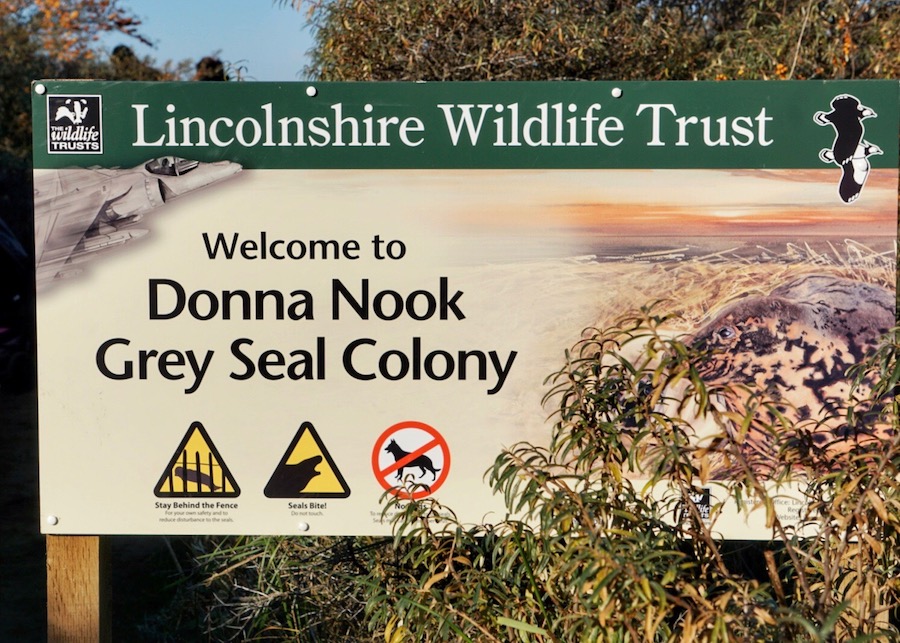
Donna Nook Nature Reserve is open all year, but the seal viewing area and visitor facilities are seasonal. They are usually open from late October to early January, depending on seal numbers, from dawn until dusk.
What Is The Donna Nook Seal Viewing Area Like?
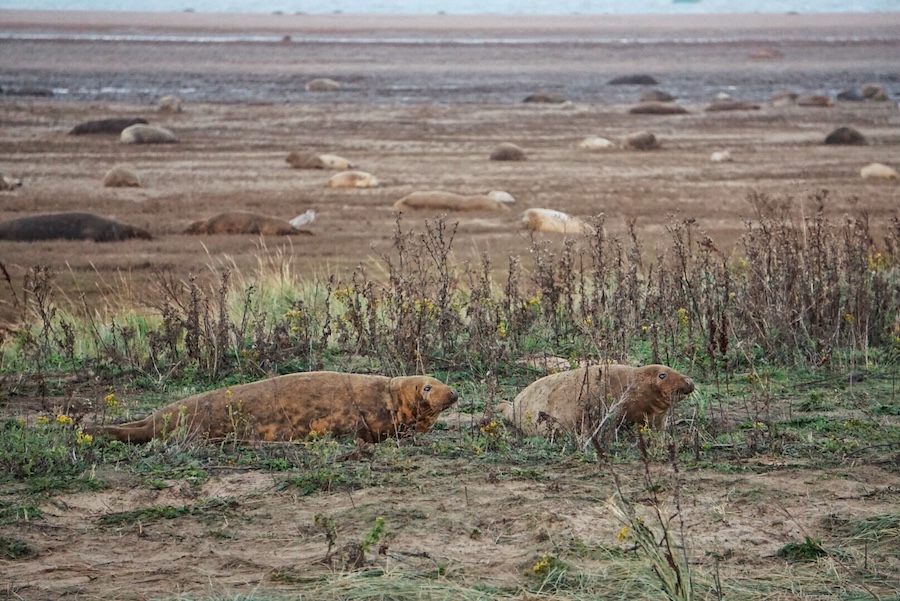
The seal viewing area at Donna Nook runs alongside the saltmarsh, with a fence separating visitors from the seals. You must stay behind the barrier, but that does not mean the seals are always far away. Some may be surprisingly close to the fence, while others can be much further out across the reserve.
We walked the full length of the viewing area and had good views throughout. There are also information boards along the route explaining more about the seals and the breeding colony, so it is worth taking your time rather than stopping at the first group you see.
You cannot touch or approach the seals, even when a pup is incredibly close. In reality, you do not need to. Seeing a fluffy white pup snoozing just a few feet away is quite special enough.
Dogs are not permitted in the seal viewing area. Visitors should also avoid flash photography and follow all warning signs, including red flags marking restricted military areas.
Our Experience Seeing The Seals At Donna Nook
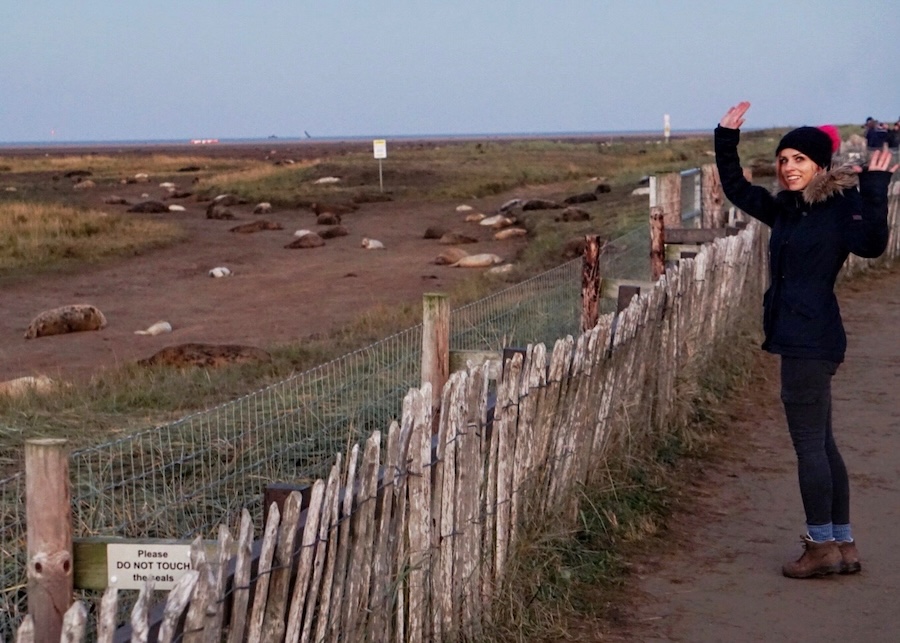
Seeing grey seals in photos is one thing, but watching them spread across the Lincolnshire saltmarsh, with pups sometimes lying just metres away, is completely different.
We mainly went to Donna Nook for one thing: fluffy baby seals. We tried to time our visits for when there would be plenty of pups around, and Donna Nook certainly delivered. Some were much further out across the saltmarsh, while others were right beside the viewing fence. Even when they are that close, you must stay behind the barrier and leave them undisturbed.
We ended up spending a good few hours walking the full length of the viewing area, stopping whenever another ridiculously fluffy face appeared near the fence. There was always something going on, and we found ourselves spending far longer watching individual seals than we expected.
One thing I had not expected was the noise. Adult grey seals make some very strange sounds, and with a large breeding colony spread out in front of you, Donna Nook is considerably noisier than the photographs suggest.
There are a few less cute reminders of what is actually happening here too. This is a wild breeding colony where seals are giving birth, so expect to see rather more afterbirth than your average wildlife day out. It is not particularly glamorous, but it does make you appreciate that you are watching something completely natural rather than visiting an attraction.
The cold was probably the other thing that caught us out. Donna Nook is exposed, and while we felt fine when we arrived, after a couple of hours standing around watching the seals we really started to feel it, particularly as the sun began to fade. A warm coat and a hot drink are very good ideas.
Despite visiting at weekends, we never felt that the crowds spoiled the experience. The viewing area is long enough to wander along at your own pace, and we had excellent views on both of our visits.
If you are wondering whether Donna Nook is worth visiting during seal season, for us it absolutely was. It is one of those wildlife experiences that is far more impressive in person than it looks in photographs.
And yes, the pups really are as cute as they look.